Class Hierarchy
epanetparser is organised as four separate stages:
EPANET input
    |
    v
Parser                    builds a model; reports structural problems only
    |
    v
EPANET model              WNTREPANETType subclasses, no rules
    |
    v
Static validation         simulator-agnostic; returns a ValidationReport
    |
    v
Simulator
The four diagrams below follow that pipeline. Each is generated from a PlantUML source file beside it, so the diagrams and the code can be checked against each other.
Overview
The whole system in one view. The eight component classes and the exception hierarchy are collapsed into stub boxes, each labelled with its real member count; both are expanded in the later diagrams.
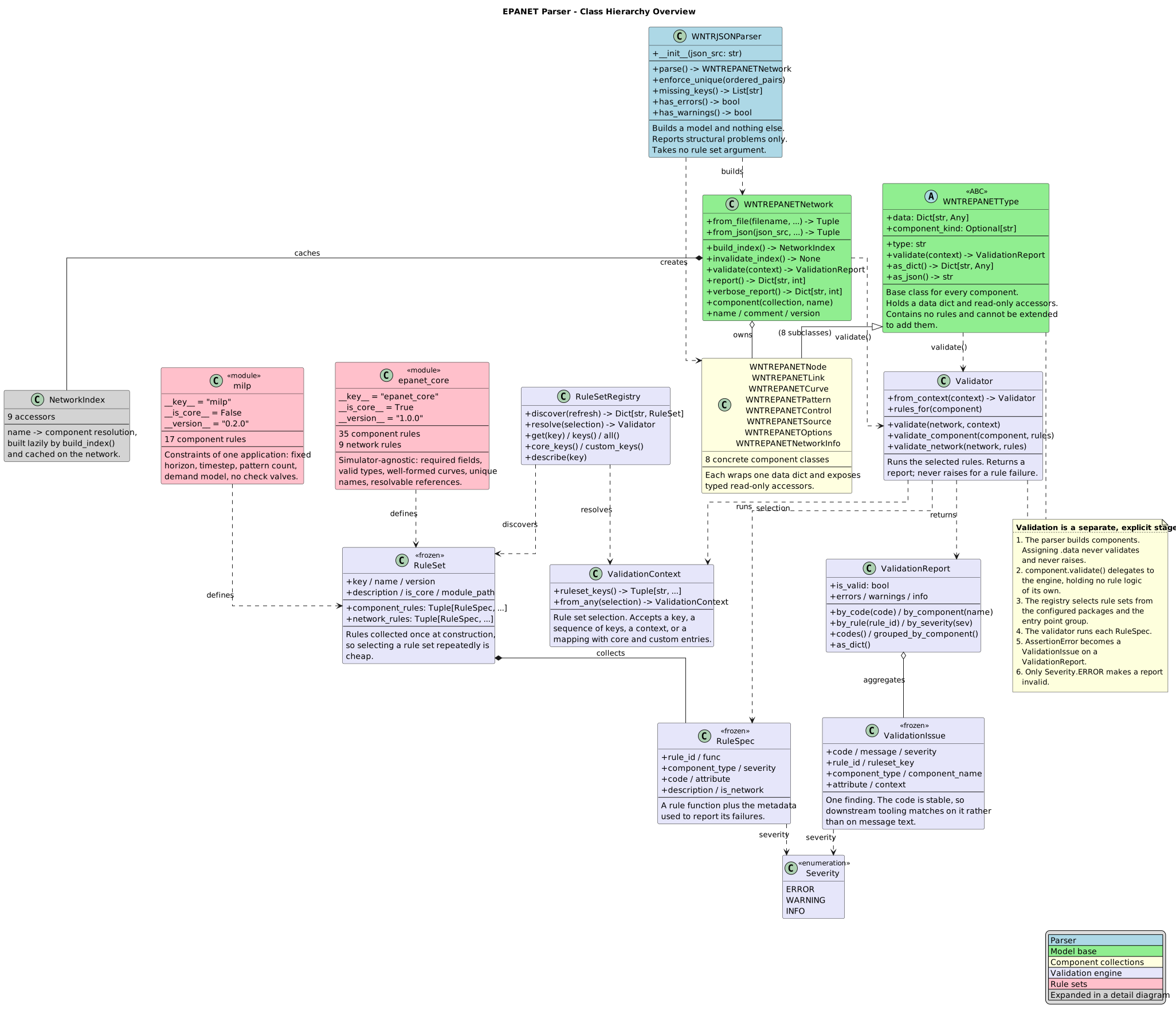
The data flow is the part worth reading. The parser builds components and
stops. component.validate() delegates to the engine, holding no rule
logic of its own, so subclasses need no overrides. The registry selects rule
sets, the validator runs each RuleSpec, and each AssertionError
becomes a ValidationIssue on a ValidationReport.
Assigning .data never validates and never raises. That is a guarantee
of the design, not an accident: it is why no component class is subclassed
or patched to add validation.
Model layer
The eight concrete component classes, the network that owns them, and the
lazy name index. The two shapes of attribute are shown on the network:
six list-backed collections (curves, patterns, nodes,
links, sources, controls) and two single instances
(options, network_info), all reached the same way.
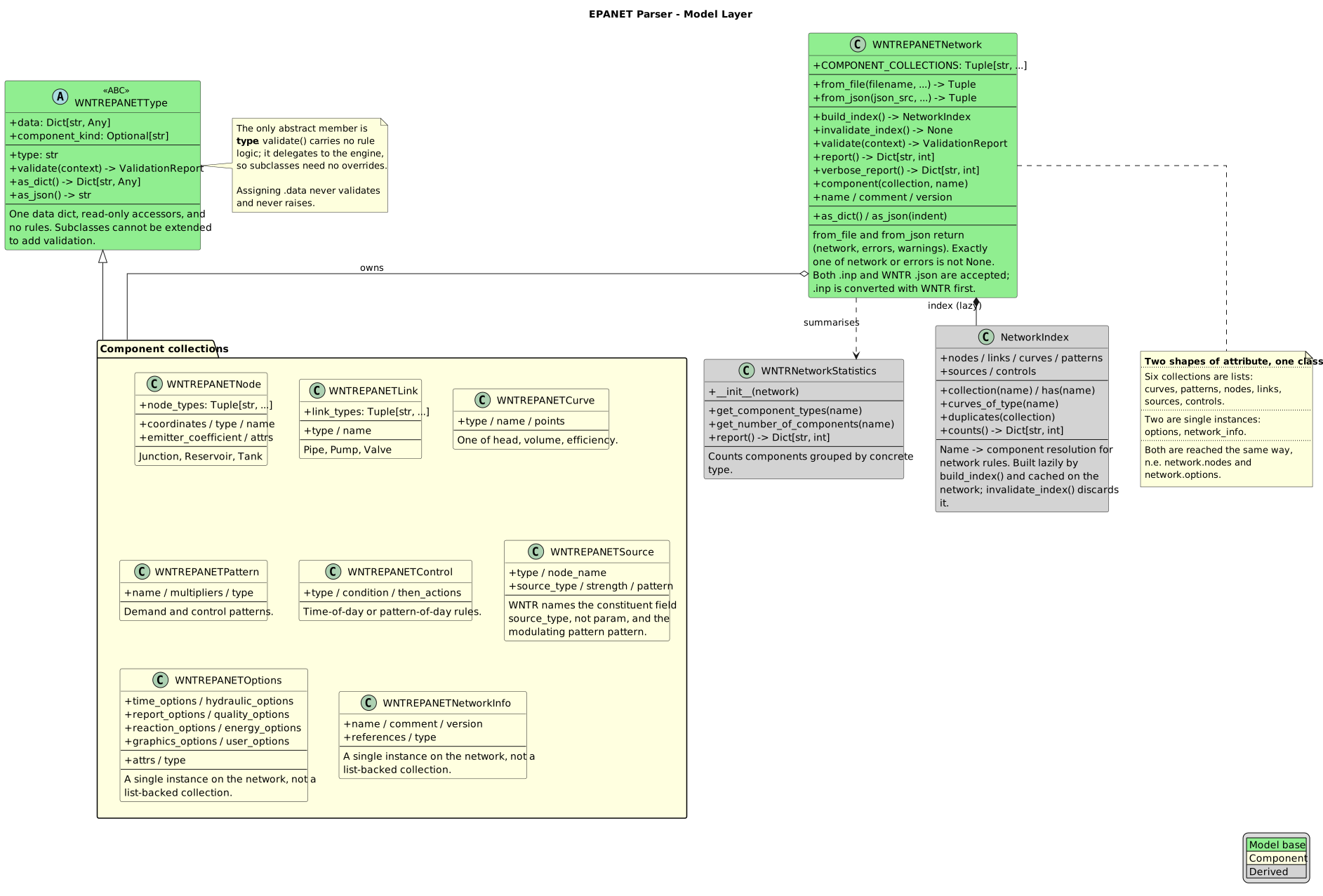
WNTREPANETType has exactly one abstract member, type. The
validate() method on it is a delegation point, not an implementation.
Validation engine
Everything in epanetparser.core.validation. A rule failure never
raises: validate() returns a report. A rule that raises anything other
than AssertionError is itself defective, and raises
RuleExecutionError instead — a broken rule silently reporting nothing
would let an invalid model pass.
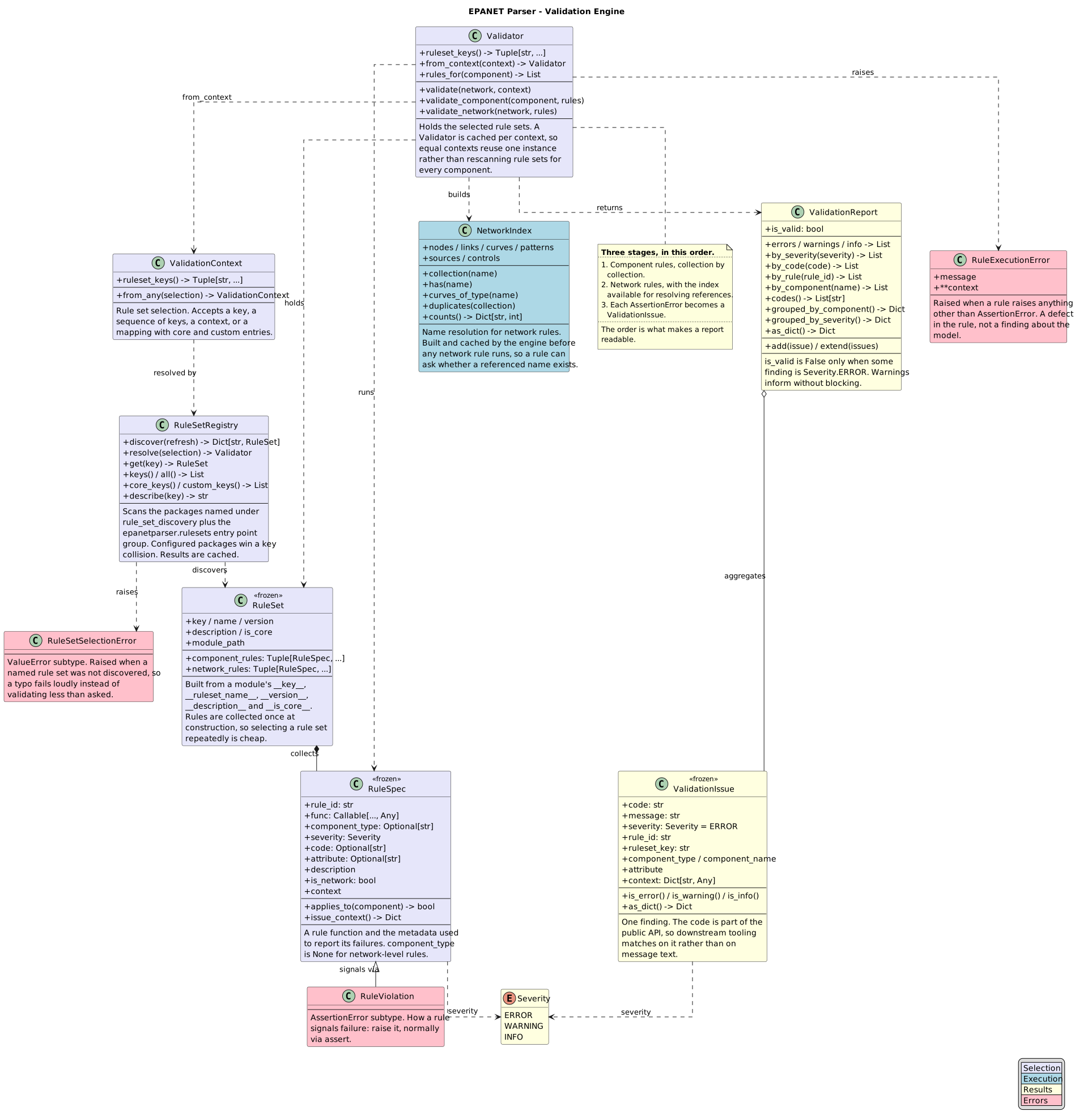
Validation runs in three stages, and the order is what makes a report readable:
component-level rules, collection by collection;
network-level rules, with the name index available for resolving references;
each
AssertionErrorbecomes aValidationIssue.
Only Severity.ERROR makes a report invalid.
Rule sets and exceptions
The modules that define rules, the decorators used to write them, and the exception taxonomy.
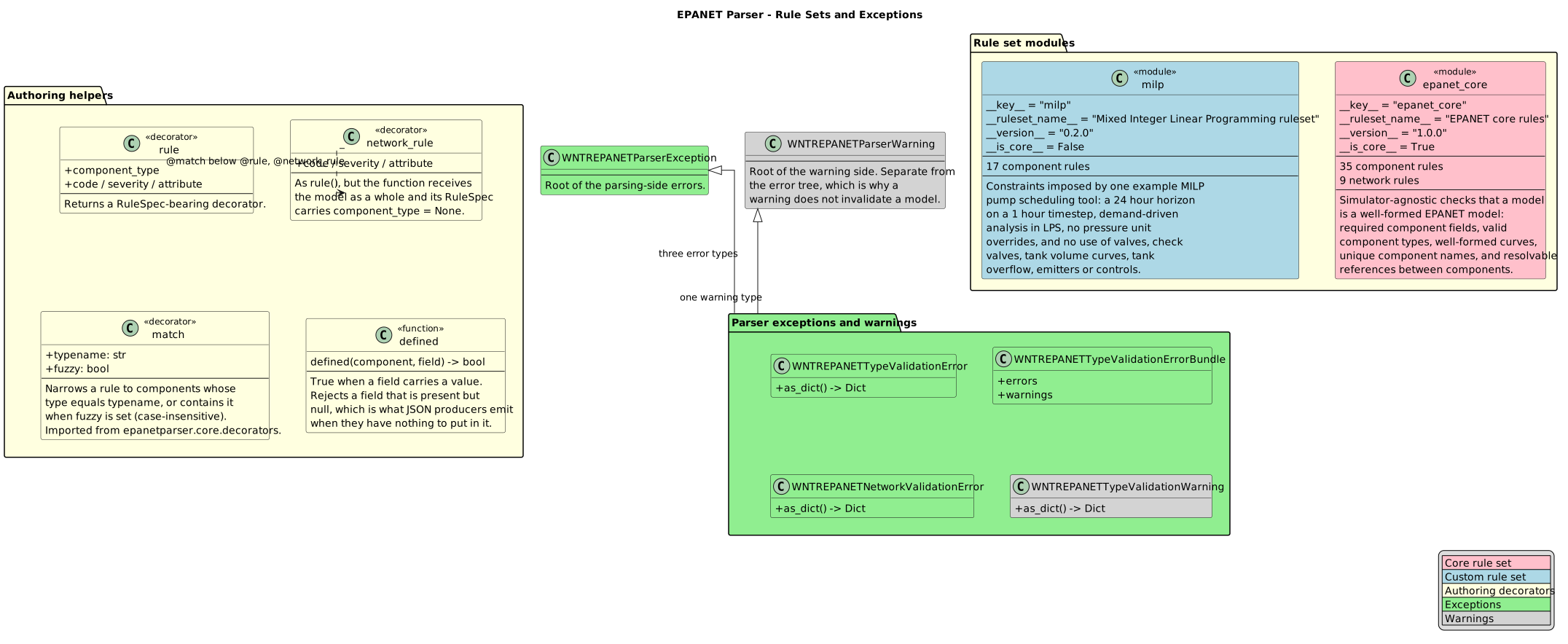
The core/custom split is the distinction the architecture exists to
express. epanet_core states what EPANET itself requires, like a
compiler’s static checks. A custom set such as milp states what one
particular formulation can handle. A model can be a valid EPANET model and
still be unusable by a given tool, and both statements are true of the same
object at the same time.
That is also why some rules moved out of the core set. A fixed pattern
length, a fixed horizon and a fixed timestep are application assumptions,
not EPANET ones, so they live in custom_rules/milp.py.
Adding a rule changes nothing else — no registry entry, no import
elsewhere, no base class to subclass. Drop a module into a package listed
under rule_set_discovery and it is discovered. Severity follows the
function name: rule_* reports ERROR, warn_* reports
WARNING. Decorator order is @rule outermost with @match below
it.
Note
These diagrams describe the codebase as it stands. If the model layer changes, they need regenerating along with it.